
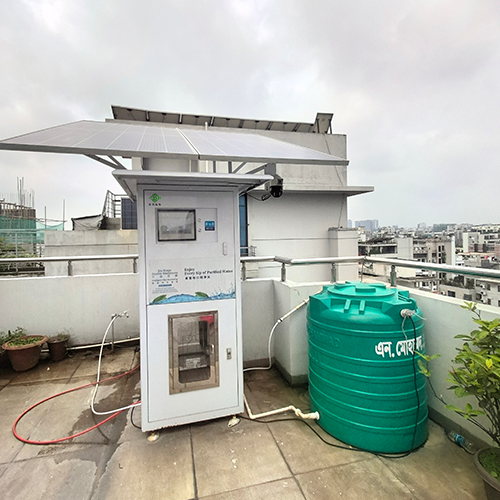
- Solar Powered Drinking Water System
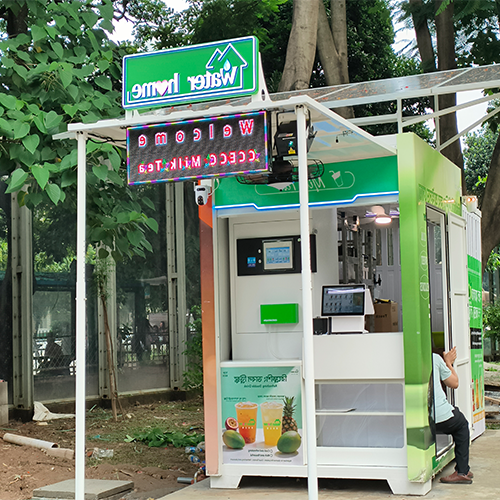
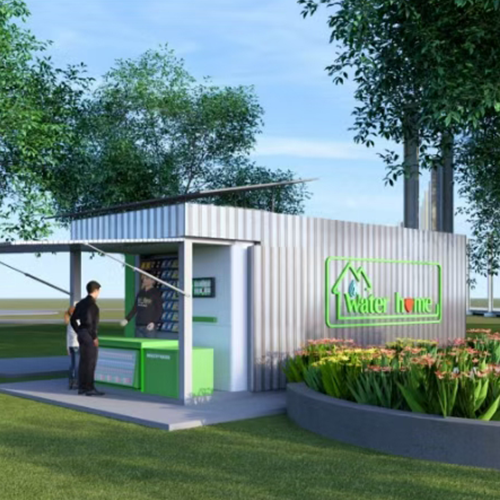
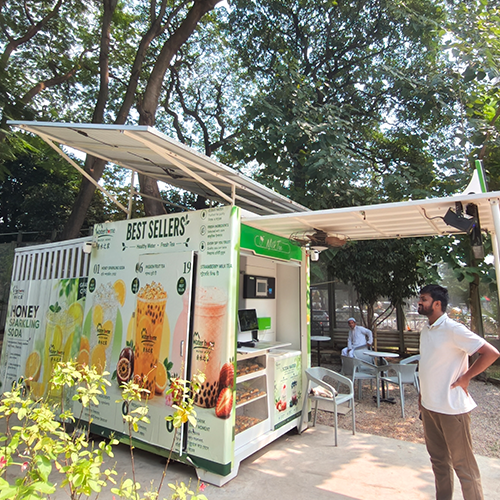
- WaterHome — Solar-Powered Mobile Beverage Station
- Solar Powered Sewage Treatment Plant
- Solar Powered Pond Aerator
- Solar Powered Water Pump
- Fiberglass Lift Station
- Solar Powered Fish Aerator
- Submersible Jet Aerator
- Solar Powered Irrigation System
- Solar Microgrid System
Compact Solar Domestic Sewage Treatment Plant from China Suppliers | Space Saving MBR Systems Factory
Technical Specifications
Payment & Shipping Terms
Brief Introduction
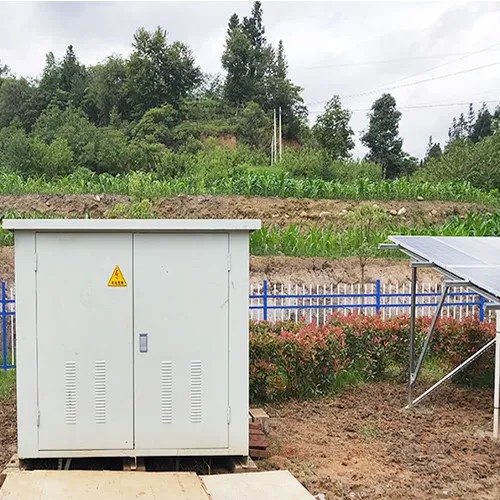
The compact solar MBR fiberglass reinforced plastic sewage treatment system is an innovative sewage treatment equipment that integrates cutting-edge technology and environmental protection concepts. This system takes membrane bioreactor (MBR) technology as its core and achieves efficient purification of wastewater through the synergistic effect of microbial degradation and membrane separation. At the same time, it innovatively introduced a solar power supply system, using clean energy to drive equipment operation, significantly reducing energy consumption and operating costs. Its main body is made of high-strength fiberglass reinforced plastic, which is lightweight, corrosion-resistant and has excellent anti-aging performance. Combining stainless steel structural components, while ensuring the strength and stability of the equipment, the space utilization is further optimized, making the entire system structure compact and exquisite, with a small floor area. It is suitable for various complex environments and site conditions. Whether it is the expansion of urban sewage treatment plants or the decentralized sewage treatment in rural areas, it can exert outstanding performance.
System Composition and Working Principle
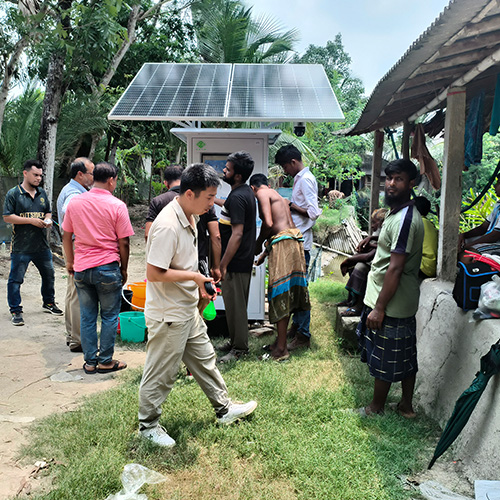
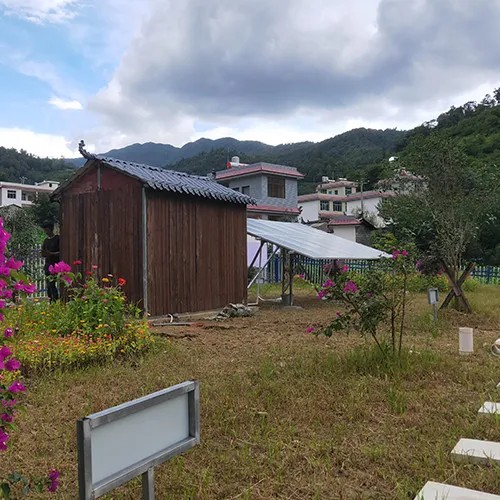
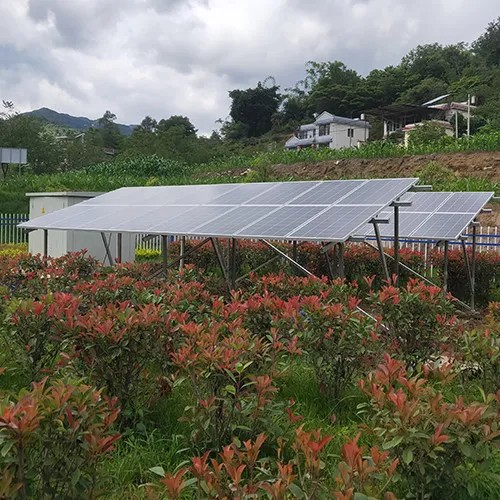
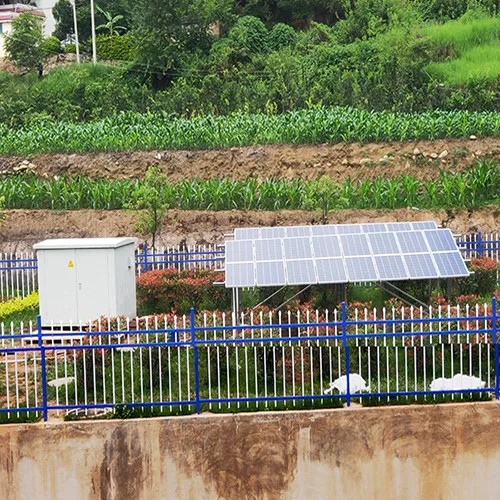
- Photovoltaic power generation: It converts light energy into electrical energy through solar panels to supply power to equipment such as water pumps, aeration devices, and control systems.
- Solar thermal assistance: Utilizing solar collectors to heat sewage, enhancing microbial activity, and optimizing treatment efficiency in winter.
- Structural design: Modular steel structures or concrete pool bodies are adopted, buried 0.5 to 3 meters underground. The surface can be restored to greenery or hardened, without occupying ground space.
-
Processing procedure:
Pretreatment: Remove large particle impurities through the grid and grit chamber;Biochemical treatment: Utilizing anaerobic/aerobic microorganisms to degrade organic matter, often combined with MBR (Membrane Bioreactor), A/O (anaerobic-aerobic), and other processes;Advanced treatment: Through membrane filtration and disinfection (ultraviolet or ozone) to meet emission standards;Sludge treatment: Some systems integrate solar drying technology to reduce the amount of sludge.
Applicable Scenarios
- Decentralized sewage treatment: Rural communities, scenic spots, highway service areas, remote villa areas and other regions not covered by municipal pipelines.
- Ecologically sensitive areas: Areas around nature reserves or water sources that require low noise, low odor, and harmonious landscape.
Characteristics & Core Advantages
-
The energy self-sufficiency rate is high: The proportion of solar power supply can reach 60% to 90%, reducing reliance on the power grid and making it particularly suitable for areas with unstable power supply.
Case: A rural solar-powered underground treatment station can process 500 tons of sewage per day, and its annual power generation can meet 80% of the equipment's energy consumption.
- Low-carbon emission reduction: Compared with traditional municipal treatment plants, carbon emissions are reduced by 40% to 60%, which is in line with the "dual carbon" goals.
- It occupies less land and has a friendly landscape: The buried design only occupies 1/3 to 1/2 of the ground area. The surface can be used as a parking lot, garden or farmland. For example, a lawn square can be built above the buried treatment station in a residential area.
- Low noise and low odor: The equipment is buried underground and, in combination with sound insulation materials, the operating noise is less than 50 decibels. The closed structure reduces the leakage of odors and needs to be equipped with deodorization devices such as biological filters.
- High degree of automation: Integrated with a PLC control system, it uses solar-powered sensors to monitor water quality (COD, ammonia nitrogen, etc.) in real time and automatically adjust aeration, dosing and other processes.
- The operation and maintenance cost is low: The modular design is convenient for maintenance. The solar energy system has no fuel cost and the amount of manual maintenance is reduced by 30% compared with traditional processes.
- Strong adaptability: The process parameters can be adjusted according to the fluctuations in water quality. In winter, the photothermal auxiliary system ensures that the water temperature is ≥15℃, maintaining the activity of microorganisms.
- The initial investment is relatively high: The construction cost of solar energy equipment and buried structures is 15%-25% higher than that of traditional processes, but this can be offset by government subsidies or long-term energy-saving benefits.
- Affected by weather: Continuous rainy weather may cause fluctuations in power supply. It is necessary to use energy storage batteries (such as lithium batteries) or backup power sources.