
- Solar Powered Drinking Water System
- WaterHome — Solar-Powered Mobile Beverage Station
- Solar Powered Sewage Treatment Plant
- Solar Powered Pond Aerator
- Solar Powered Water Pump
- Fiberglass Lift Station
- Solar Powered Fish Aerator
- Submersible Jet Aerator
- Solar Powered Irrigation System
- Solar Microgrid System
Compact Solar Domestic Sewage Treatment Plant - Space Saving MBR Household Systems from China Suppliers & Factory
Technical Specifications
Compact Domestic Sewage Treatment Plant, Space Saving Domestic Sewage Treatment Plant, Space Saving Household Sewage Treatment Systems
Payment & Shipping Terms
Brief Introduction
The compact solar MBR fiberglass reinforced plastic sewage treatment system is an innovative sewage treatment equipment that integrates cutting-edge technology and environmental protection concepts. This system takes membrane bioreactor (MBR) technology as its core and achieves efficient purification of wastewater through the synergistic effect of microbial degradation and membrane separation. At the same time, it innovatively introduced a solar power supply system, using clean energy to drive equipment operation, significantly reducing energy consumption and operating costs. Its main body is made of high-strength fiberglass reinforced plastic, which is lightweight, corrosion-resistant and has excellent anti-aging performance. Combining stainless steel structural components, while ensuring the strength and stability of the equipment, the space utilization is further optimized, making the entire system structure compact and exquisite, with a small floor area. It is suitable for various complex environments and site conditions. Whether it is the expansion of urban sewage treatment plants or the decentralized sewage treatment in rural areas, it can exert outstanding performance.
System Composition and Working Principle
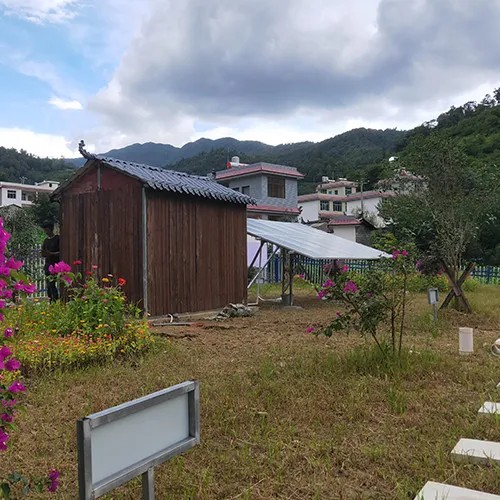
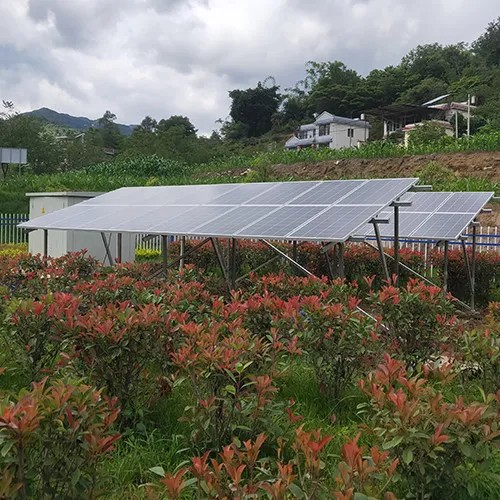
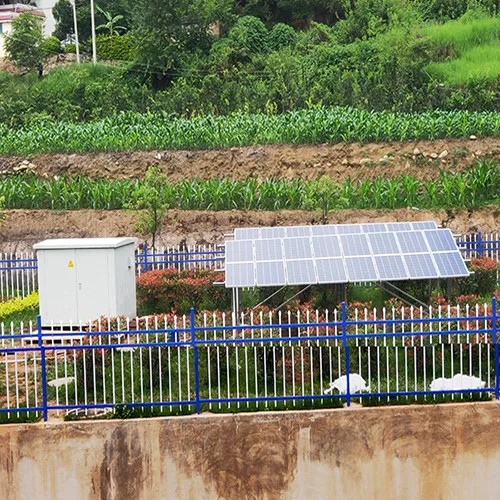
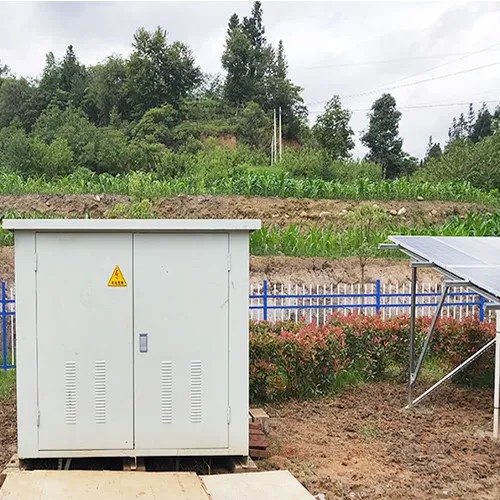
Solar Energy Utilization Module
Buried Treatment Unit
Remove large particle impurities through the grid and grit chamber;
Utilizing anaerobic/aerobic microorganisms to degrade organic matter, often combined with MBR (Membrane Bioreactor), A/O (anaerobic-aerobic), and other processes;
Through membrane filtration and disinfection (ultraviolet or ozone) to meet emission standards;
Some systems integrate solar drying technology to reduce the amount of sludge.
Applicable Scenarios & Operational Characteristics
Applicable Scenarios
Rural communities, scenic spots, highway service areas, remote villa areas and other regions not covered by municipal pipelines.
Areas around nature reserves or water sources that require low noise, low odor, and harmonious landscape.
Core Advantages (Energy Conservation and Sustainability)
The proportion of solar power supply can reach 60% to 90%, reducing reliance on the power grid and making it particularly suitable for areas with unstable power supply.
Compared with traditional municipal treatment plants, carbon emissions are reduced by 40% to 60%, which is in line with the "dual carbon" goals.
Environmental and Spatial Advantages
The buried design only occupies 1/3 to 1/2 of the ground area. The surface can be used as a parking lot, garden or farmland. For example, a lawn square can be built above the buried treatment station in a residential area.
The equipment is buried underground and, in combination with sound insulation materials, the operating noise is less than 50 decibels. The closed structure reduces the leakage of odors and needs to be equipped with deodorization devices such as biological filters.
Technical and Operation & Maintenance
Integrated with a PLC control system, it uses solar-powered sensors to monitor water quality (COD, ammonia nitrogen, etc.) in real time and automatically adjust aeration, dosing and other processes.
The modular design is convenient for maintenance. The solar energy system has no fuel cost and the amount of manual maintenance is reduced by 30% compared with traditional processes.
The process parameters can be adjusted according to the fluctuations in water quality. In winter, the photothermal auxiliary system ensures that the water temperature is ≥15℃, maintaining the activity of microorganisms.
Frequently Asked Questions
The system features a processing capacity ranging from 10 to 100 M3/d, utilizing AAO technology to meet Level A discharge standards.
While the solar power supply can reach 60% to 90% energy self-sufficiency, continuous rainy conditions are managed via integrated energy storage batteries (such as lithium batteries) or the 220V main power supplement.
The unit is buried 0.5 to 3 meters underground, occupying only 1/3 to 1/2 of conventional ground space. The surface can be converted into gardens, lawns, or parking lots, while sound insulation keeps operating noise below 50 decibels.
The system features a solar thermal assistance module that utilizes solar collectors to heat the sewage, ensuring the water temperature remains ≥15℃ to maintain optimal microbial activity in winter.
The plant is equipped with a PLC control system and solar-powered sensors that monitor water quality parameters (such as COD and ammonia nitrogen) in real time, automatically regulating aeration, dosing, and other operation processes.
The Minimum Order Quantity is 1 set with a price range of USD 2000-4000. It is packaged in wooden boxes, delivers within 7-15 days, and supports payment via L/C, T/T, and Western Union.