
- Solar Powered Drinking Water System
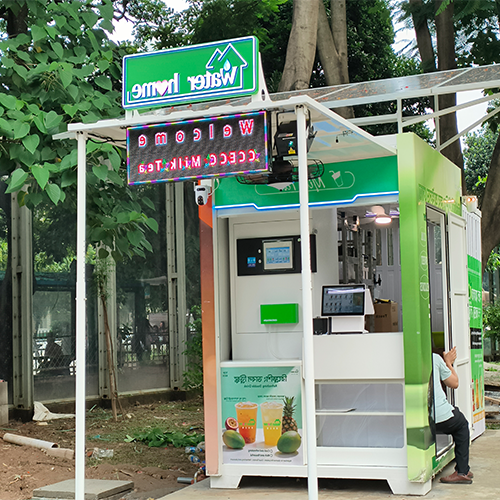
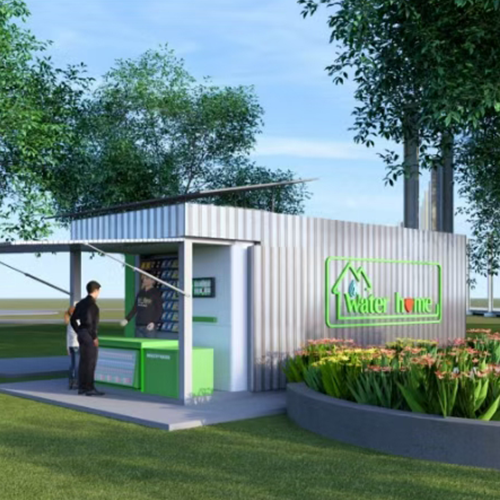
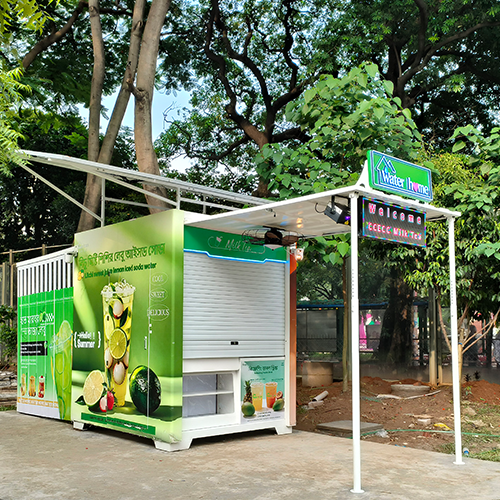
- WaterHome — Solar-Powered Mobile Beverage Station
- Solar Powered Sewage Treatment Plant
- Solar Powered Pond Aerator
- Solar Powered Water Pump
- Fiberglass Lift Station
- Solar Powered Fish Aerator
- Submersible Jet Aerator
- Solar Powered Irrigation System
- Solar Microgrid System

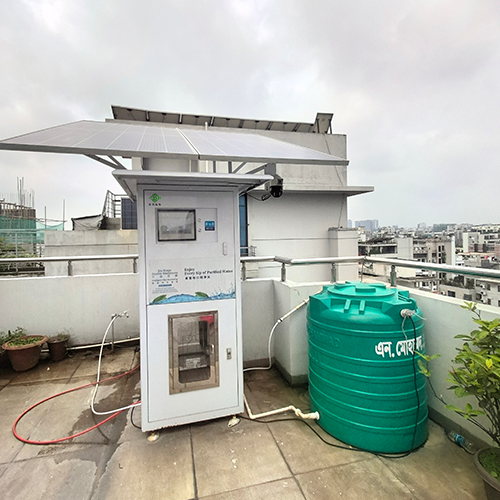
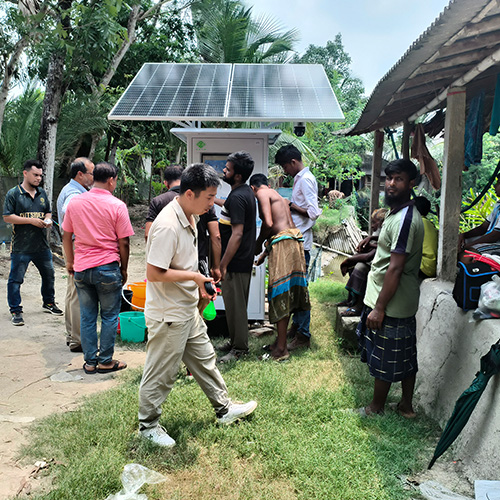
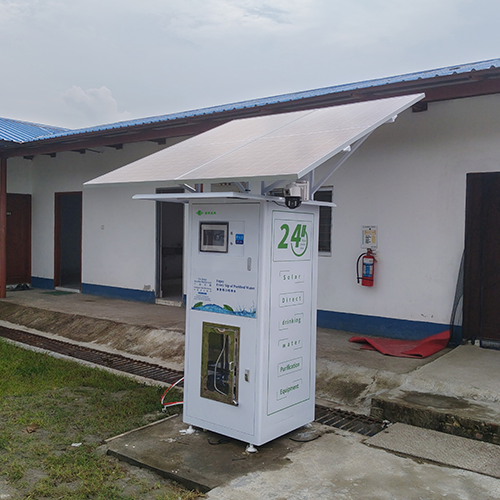
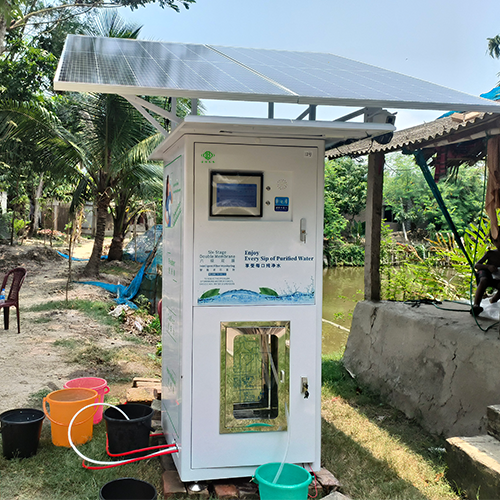
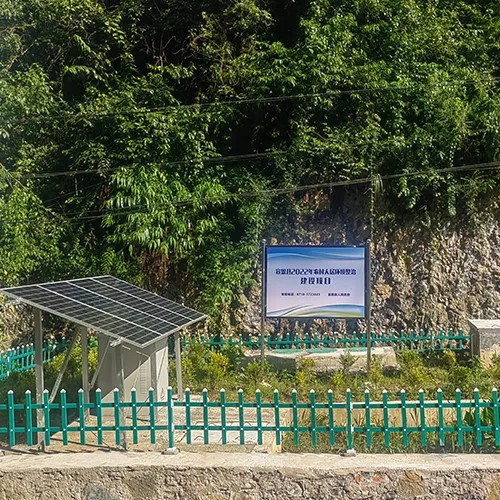
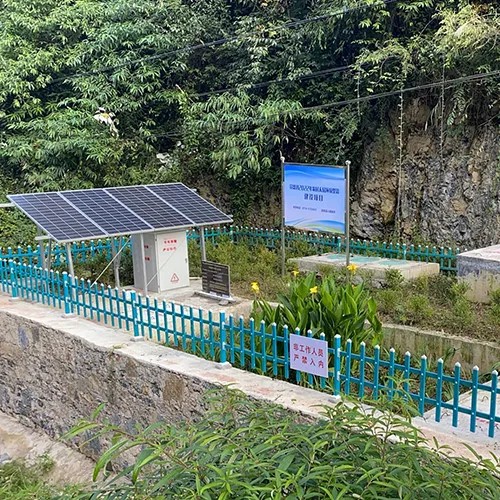
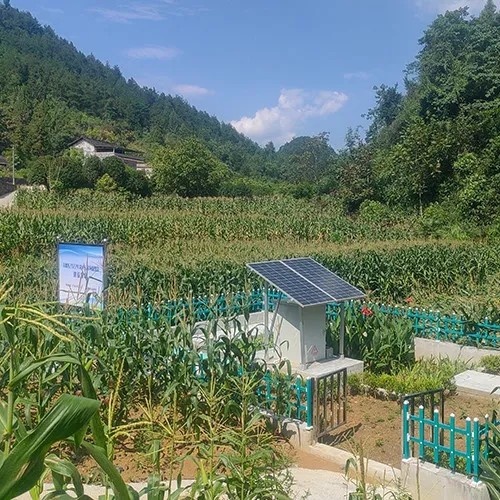
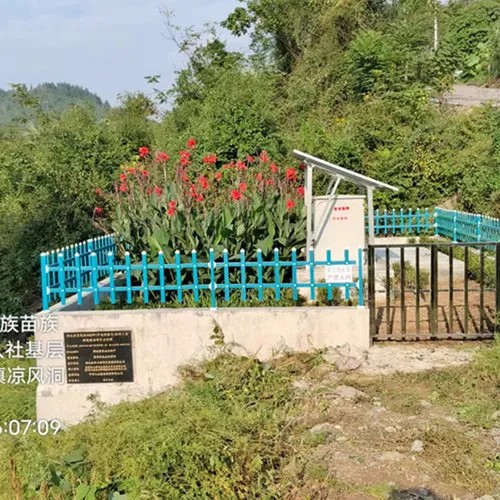
Modular Solar Powered Wastewater Treatment Plant - China Suppliers & Factory - Industrial & Domestic Solutions
Driven by solar energy, it reduces traditional power consumption and lowers carbon emissions, meeting the demands of green industry.
No chemical agents need to be added, avoiding secondary pollution and making the treatment process more environmentally friendly.
The pore size of nanofiltration membranes is usually 1 to 10 nanometers, capable of retaining substances with molecular weights ranging from 100 to 1000 Da. The removal rate of heavy metals, organic substances, and hardness ions (such as calcium and magnesium ions) is over 90%.
It can simultaneously achieve multiple goals such as desalination, decolorization and removal of trace pollutants, and the effluent quality is stable.
Membrane materials (such as polyamide, ceramics, and composite nanomaterials) possess acid and alkali resistance as well as anti-pollution properties, making them suitable for complex industrial wastewater environments.
The solar power supply system can be combined with energy storage devices to achieve all-weather operation and adapt to the light conditions of different regions.
The system adopts a modular design, which can be flexibly expanded according to the wastewater treatment volume and is easy to install.
Membrane modules can be regenerated through chemical cleaning or physical flushing, with low maintenance costs and a long service life (usually 3 to 5 years).
Solar energy conversion and drive
Solar power generation module: It converts solar energy into electrical energy through photovoltaic panels, providing power for water pumps, control systems and membrane modules, and promoting the circulation of wastewater within the system.
Energy storage system: If equipped with a battery, it can store electrical energy when there is no light, ensuring the continuous operation of the system.
Nanofiltration membrane separation mechanism
Screening effect: Under the drive of pressure, wastewater passes through the nanofiltration membrane, and particles larger than the membrane pore size, colloids and large molecular organic substances are retained.
Charge repulsion: The membrane surface carries a charge (such as a negative charge), which can repulsion like ions (such as anions) through electrostatic interaction, achieving selective removal of ionic pollutants (such as reducing the hardness of wastewater).
Diffusion and adsorption: Some small-molecule pollutants can be removed through diffusion through the pores of the membrane material or surface adsorption.
Wastewater treatment process
Pretreatment: The wastewater first passes through a grid, sedimentation tank, etc. to remove large particle impurities to prevent membrane module clogging.
Nanofiltration: After pretreatment, the wastewater passes through the nanofiltration membrane at a pressure of 0.5 to 1.5 MPa under the action of a solar-powered water pump. Pollutants are retained, and the clear water passes through the membrane to become the product water.
Concentration and recovery: The retained concentrated water can be further treated or valuable substances (such as heavy metal ions) can be recovered. The produced water can be reused or discharged after meeting the standards.
For instance, cleaning wastewater from the electronics industry and electroplating wastewater are treated and reused in the production process.
By integrating solar-powered seawater desalination or brackish water purification, clean water sources can be provided.
No external power grid connection required, suitable for industrial parks or mining areas lacking infrastructure.