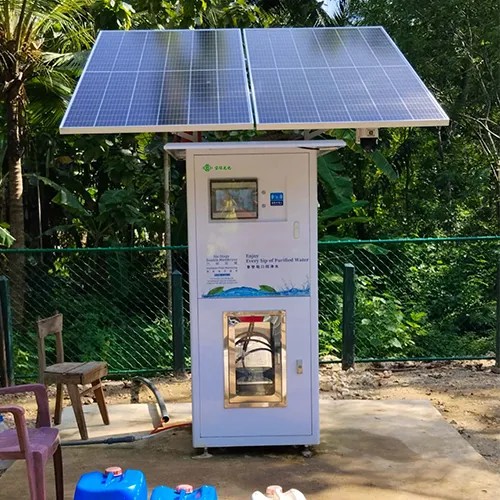
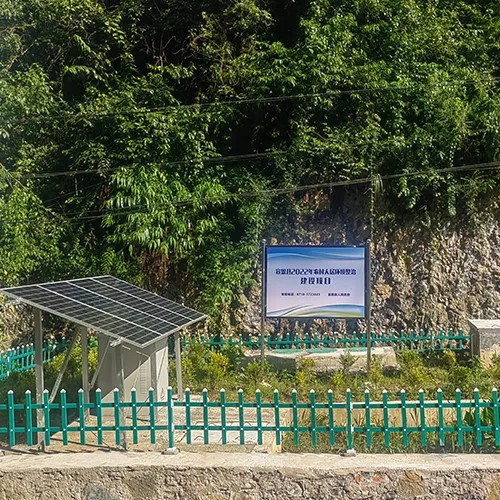
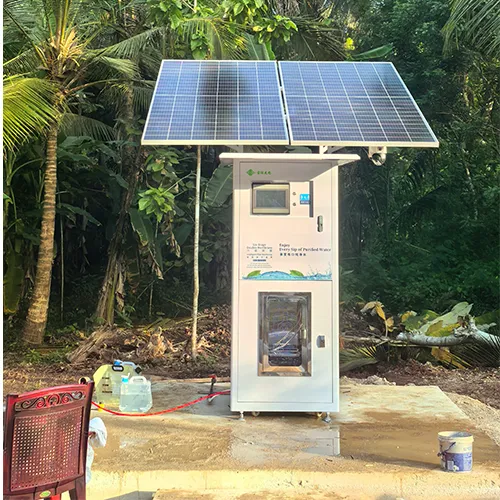
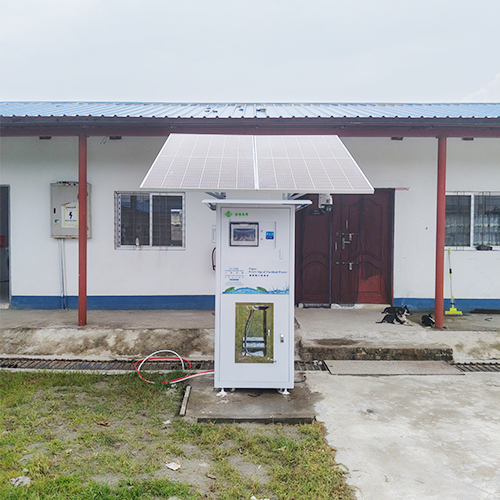
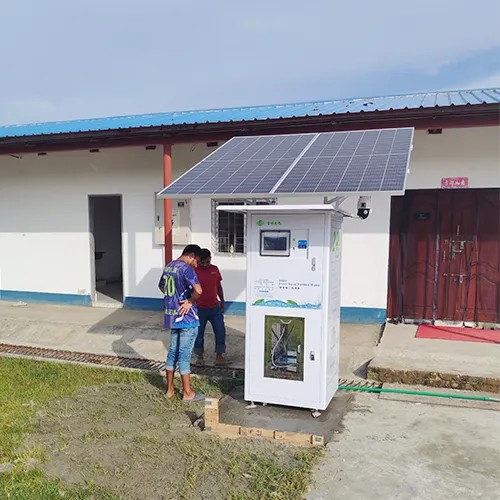
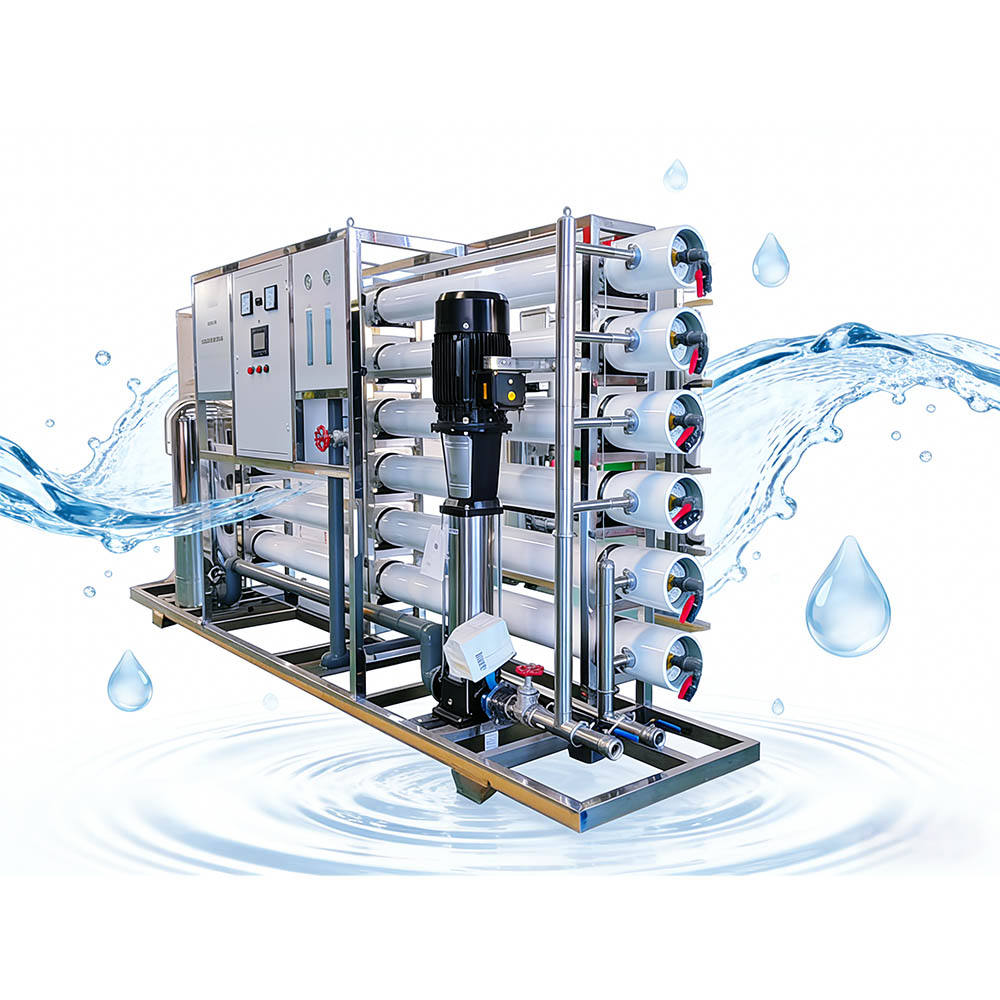
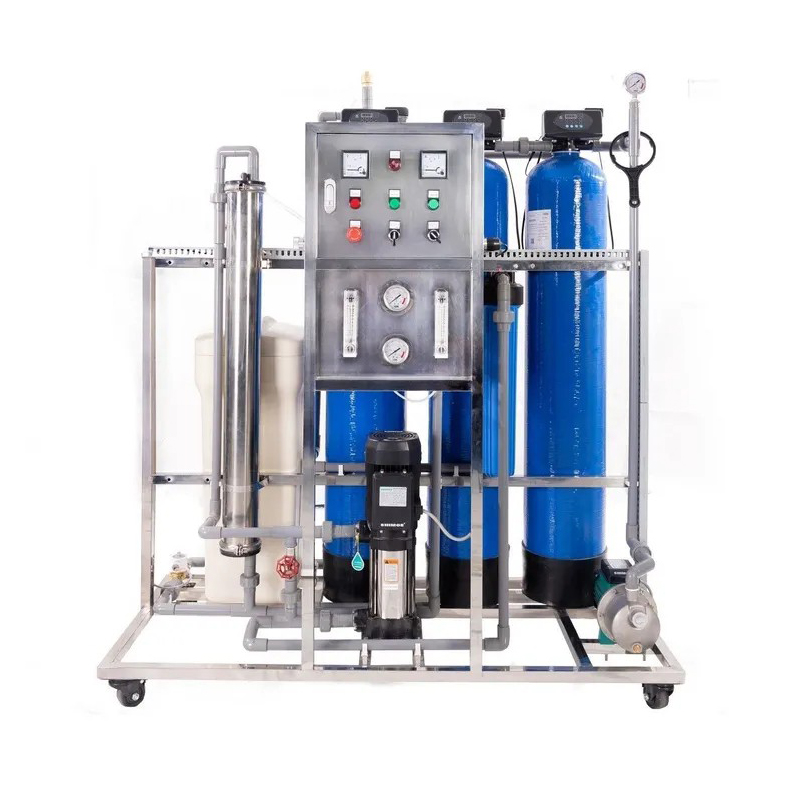
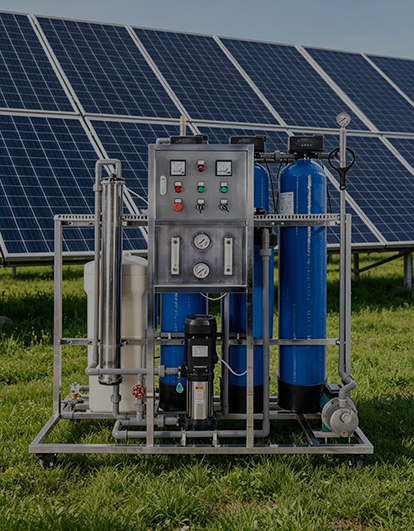
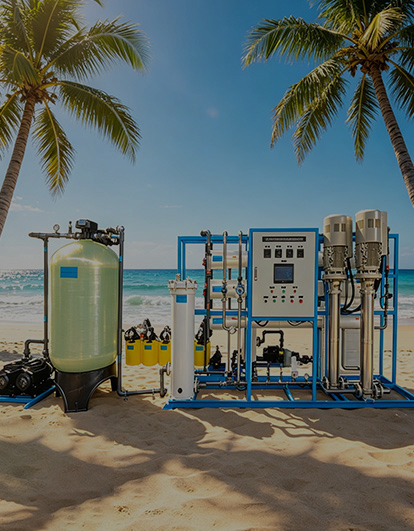
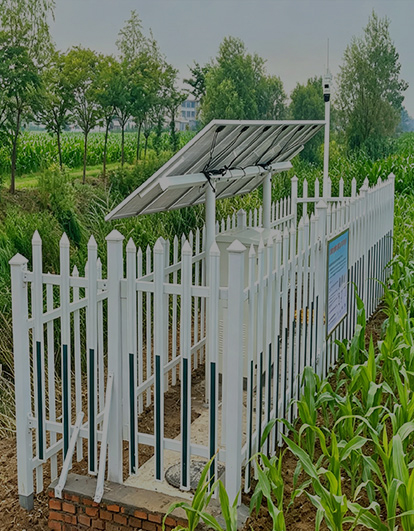
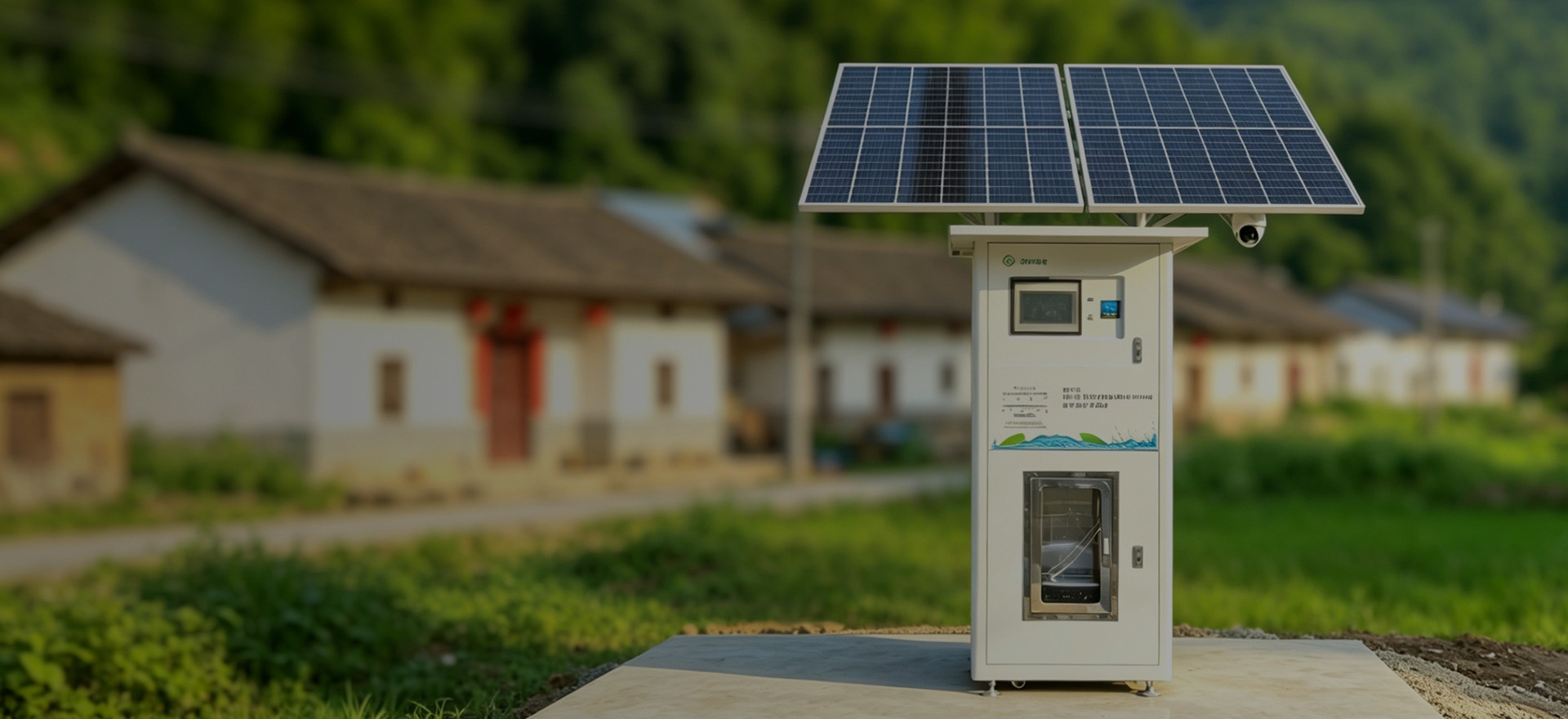
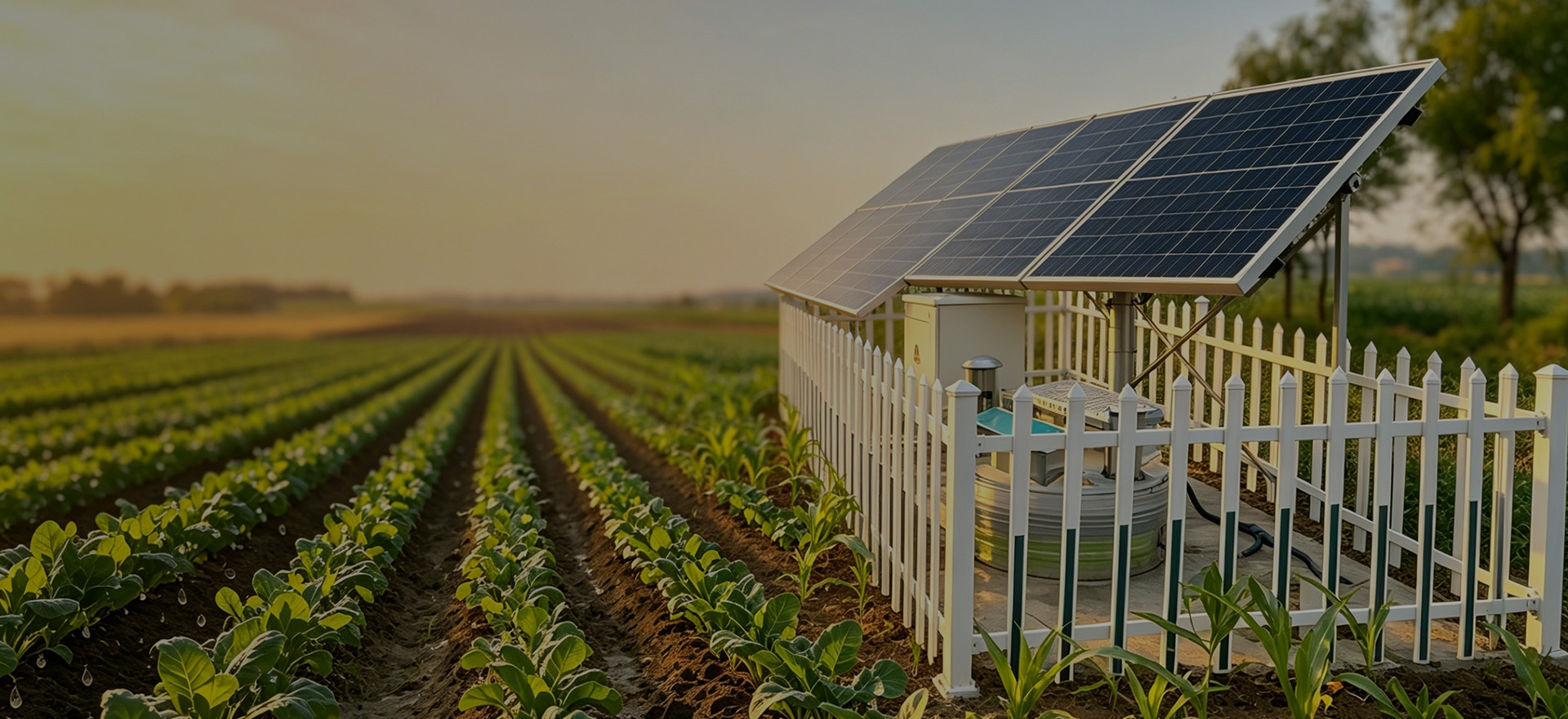
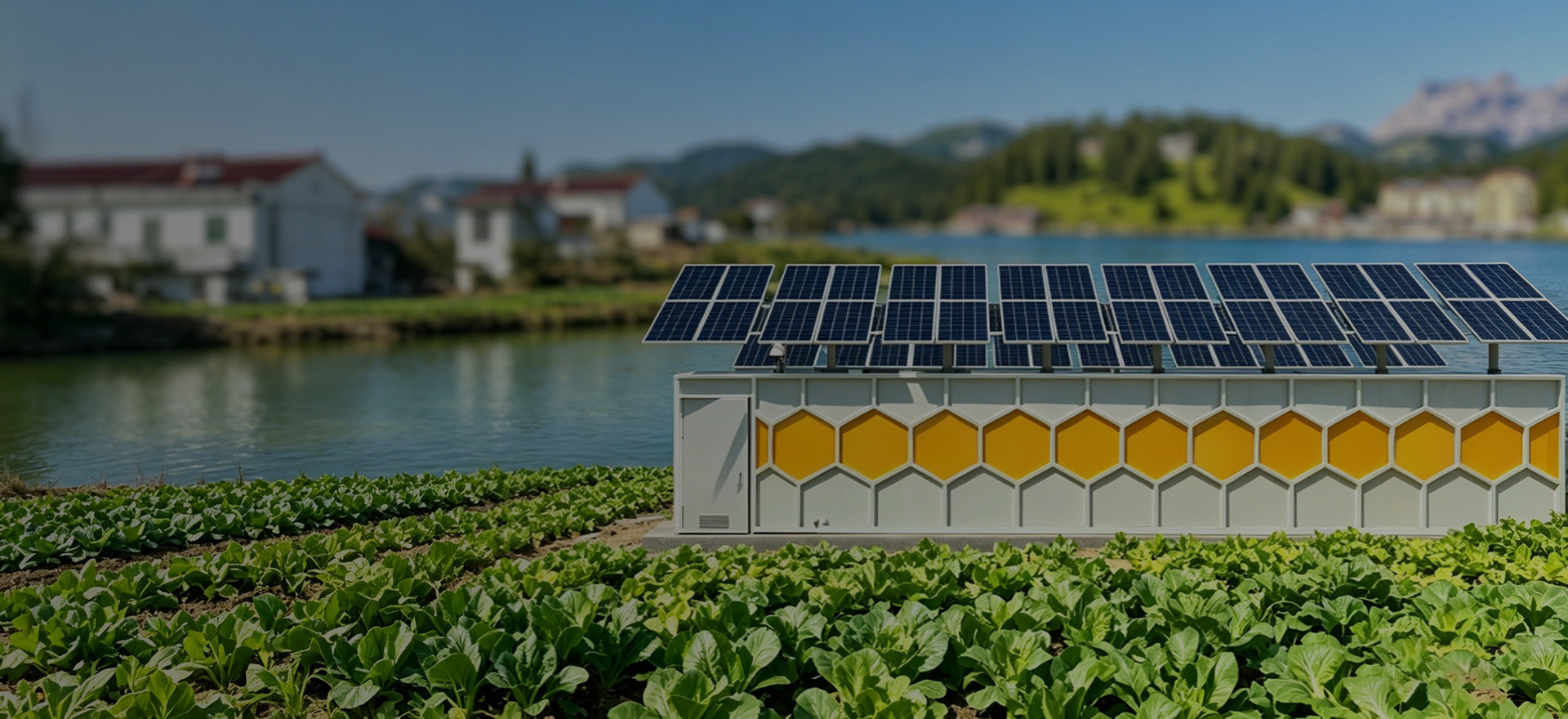
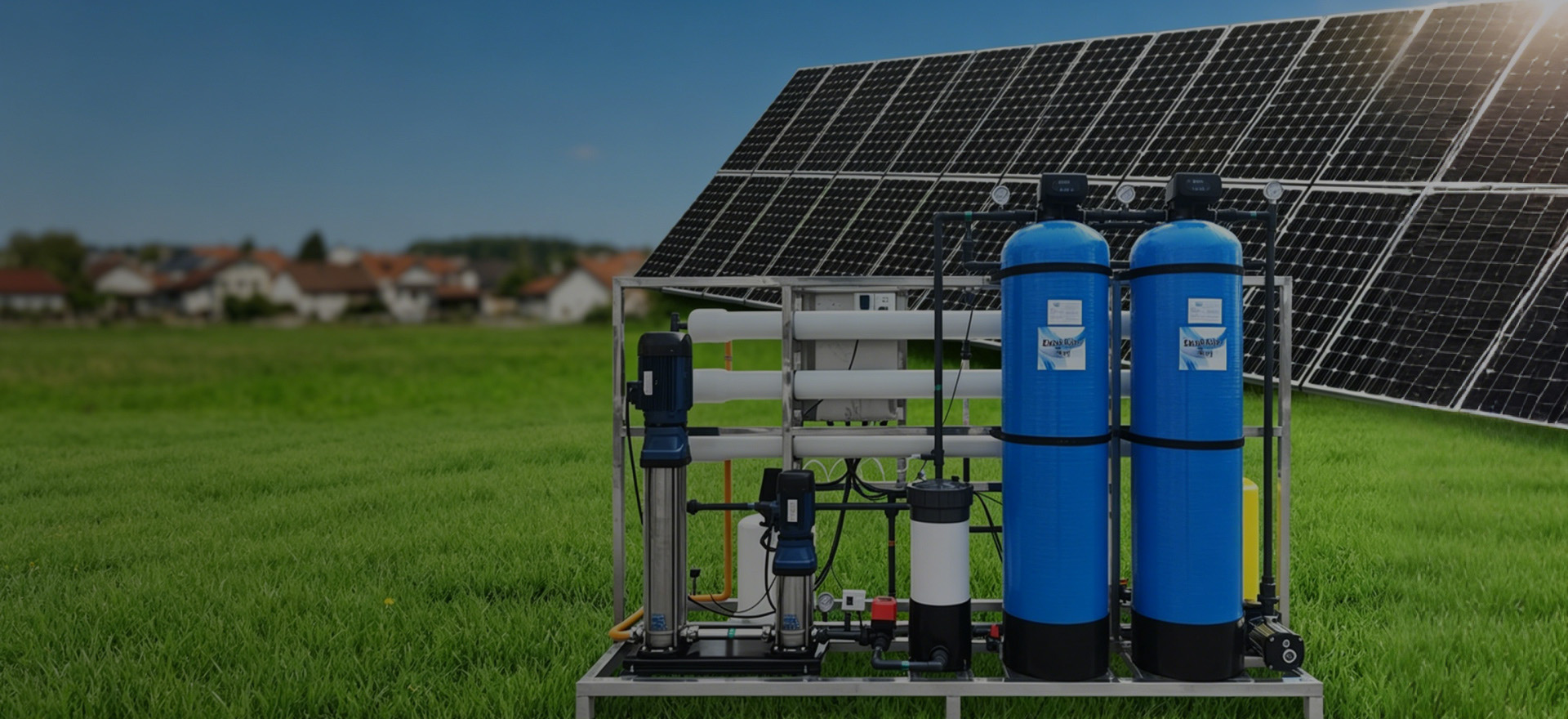
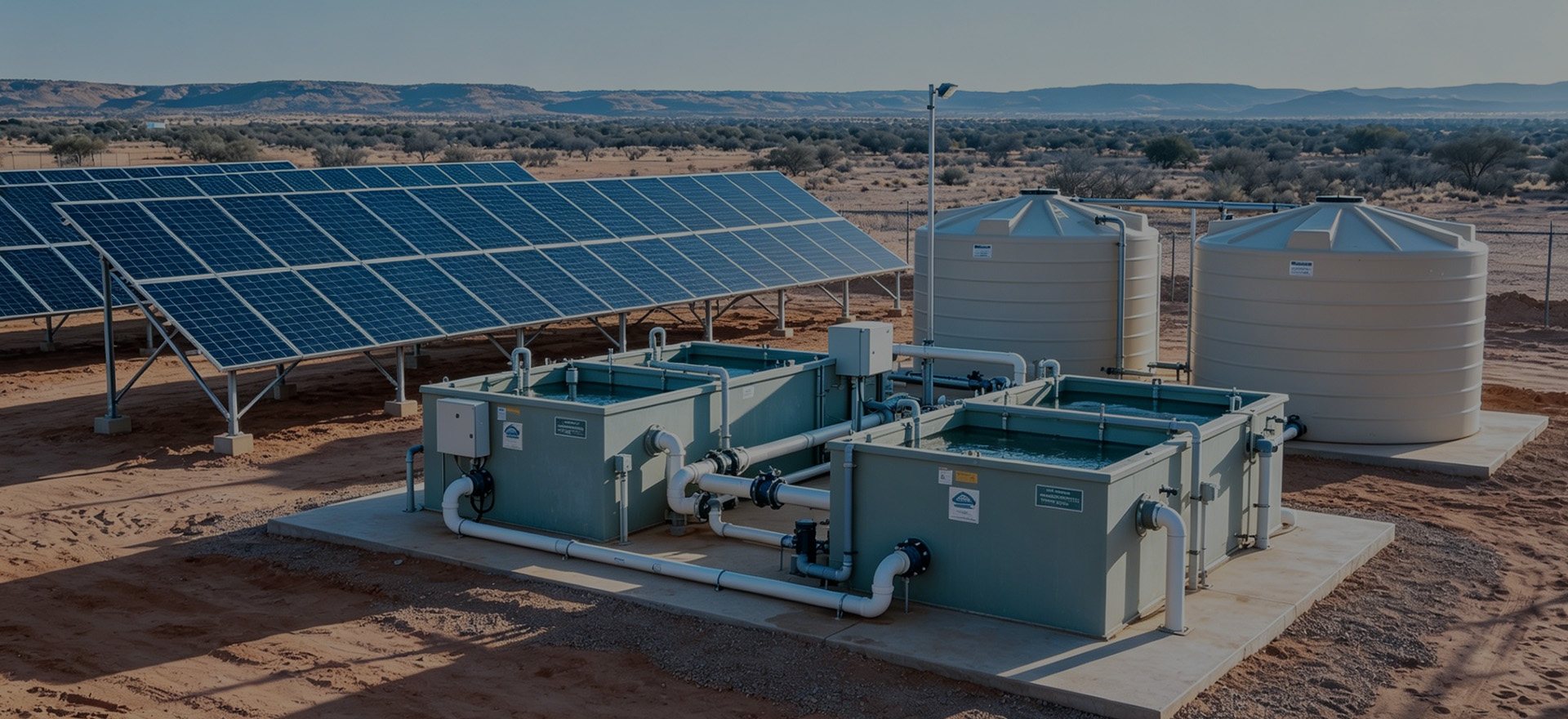
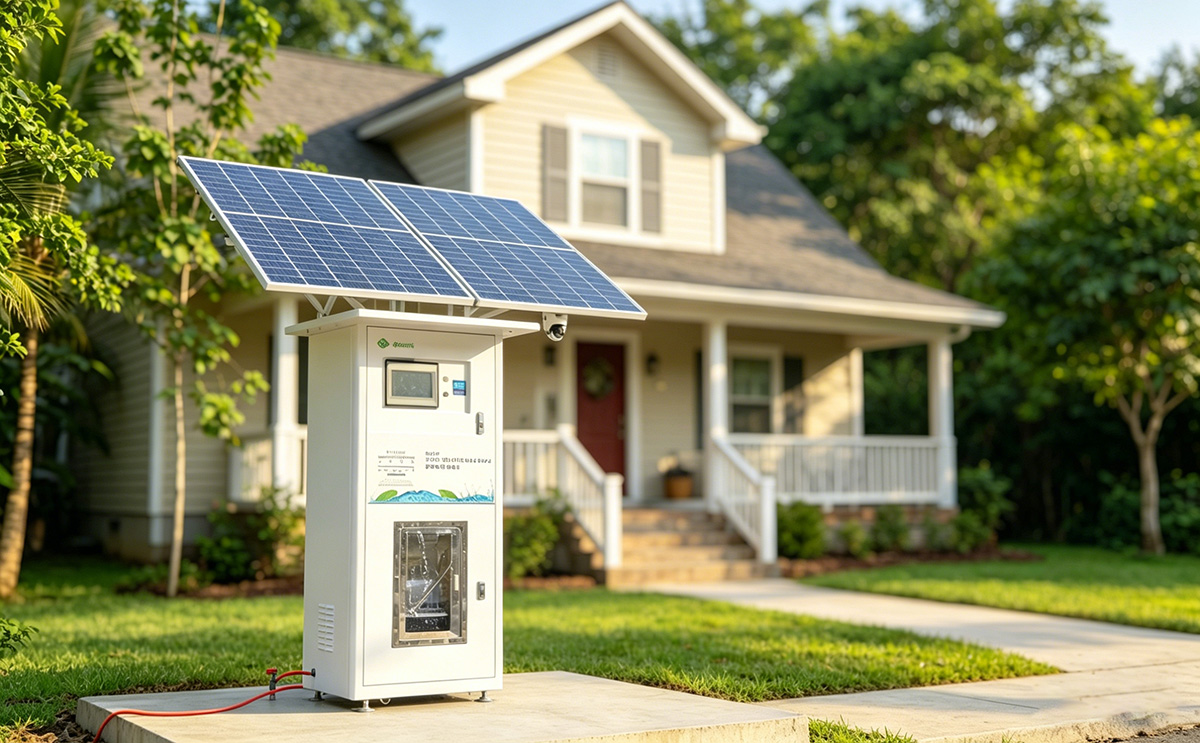
Portable, solar-driven RO filtration systems engineered for outdoor camping, off-grid expeditions and emergency water needs.


Understanding the technology that's redefining safe hydration in the wild.
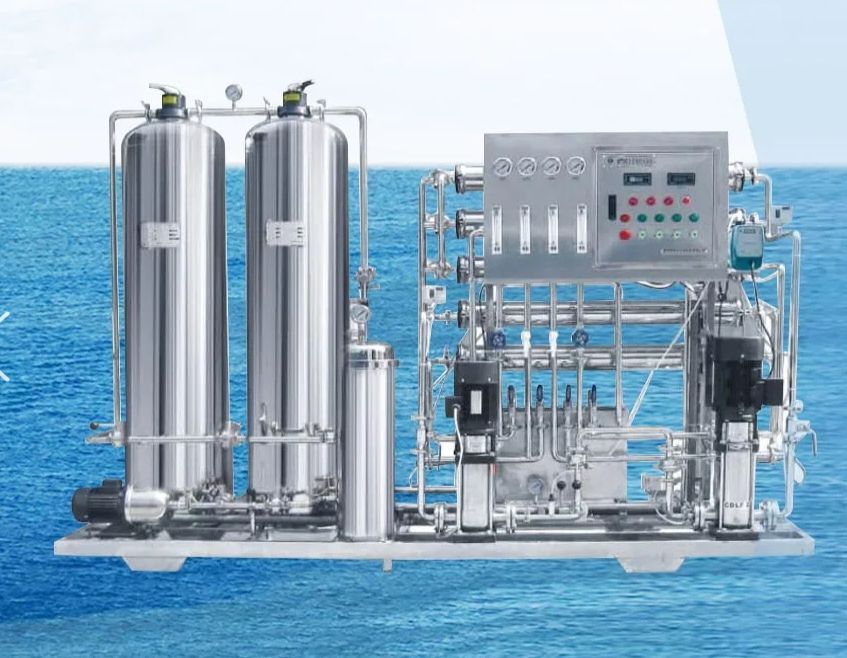
An RO plant water filter for outdoor camping is a compact, portable reverse osmosis (RO) purification system purpose-built for off-grid environments — from mountain trekking and backcountry camping to overland expeditions and disaster-relief operations. Unlike basic filtration methods such as activated carbon or UV treatment, reverse osmosis forces water through a semi-permeable membrane at high pressure, physically blocking dissolved salts, heavy metals, bacteria, viruses, nitrates, fluoride, and microplastics at the molecular level — achieving purification rates above 99%.
🌿 Key insight: A solar-powered RO camping filter eliminates the need for grid electricity, fuel canisters, or chemical treatments — making it the most self-sufficient water purification solution available for outdoor environments today.
Traditional camping filters — pump filters, squeeze bags, or iodine tablets — address biological contamination reasonably well, but fail completely against dissolved chemical pollutants, desalination, or brackish water. Modern solar RO water filters for camping address all of these challenges simultaneously, converting virtually any surface water source — river, lake, brackish estuary, or even seawater — into WHO-compliant drinking water with zero fossil-fuel input.
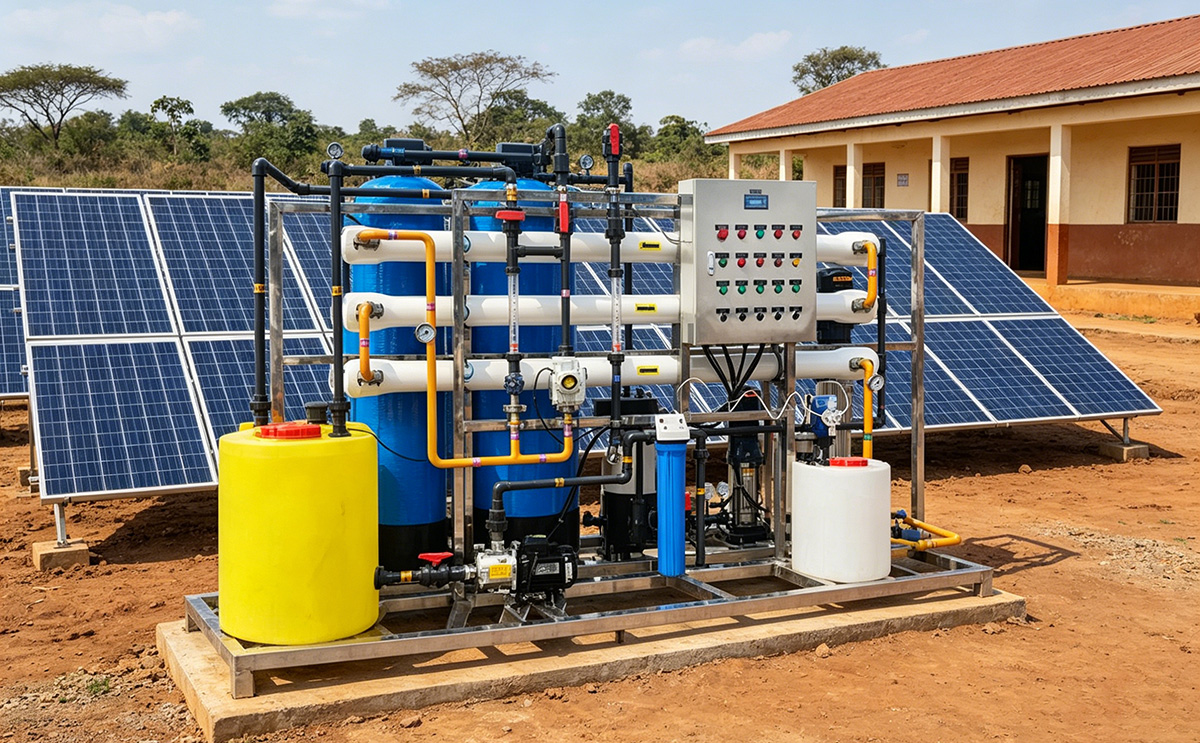
The integration of photovoltaic (PV) solar panels with high-efficiency RO membranes and intelligent pressure control systems has transformed what was once bulky industrial infrastructure into modular, deployable units weighing as little as 8–15 kg — small enough for vehicle-based overlanding or base-camp setups serving groups of 5 to 50 people.
The global market for portable water purification equipment was valued at approximately USD 4.2 billion in 2023 and is projected to exceed USD 8 billion by 2030, growing at a CAGR of over 10%. Within this market, solar-integrated RO systems represent the fastest-growing segment, driven by three converging forces: the explosion of adventure tourism and overlanding culture, increasing climate-related water insecurity, and dramatic cost reductions in photovoltaic technology over the past decade.
On the commercial side, eco-resorts, glamping operators, safari camps, and outdoor event organizers increasingly specify solar RO camping water systems as a standard infrastructure component — not only to meet potable water standards in remote locations, but also as a visible marker of environmental commitment that resonates with today's sustainability-conscious guests. The zero-carbon, zero-chemical-waste profile of solar RO directly supports ESG reporting goals for hospitality businesses.
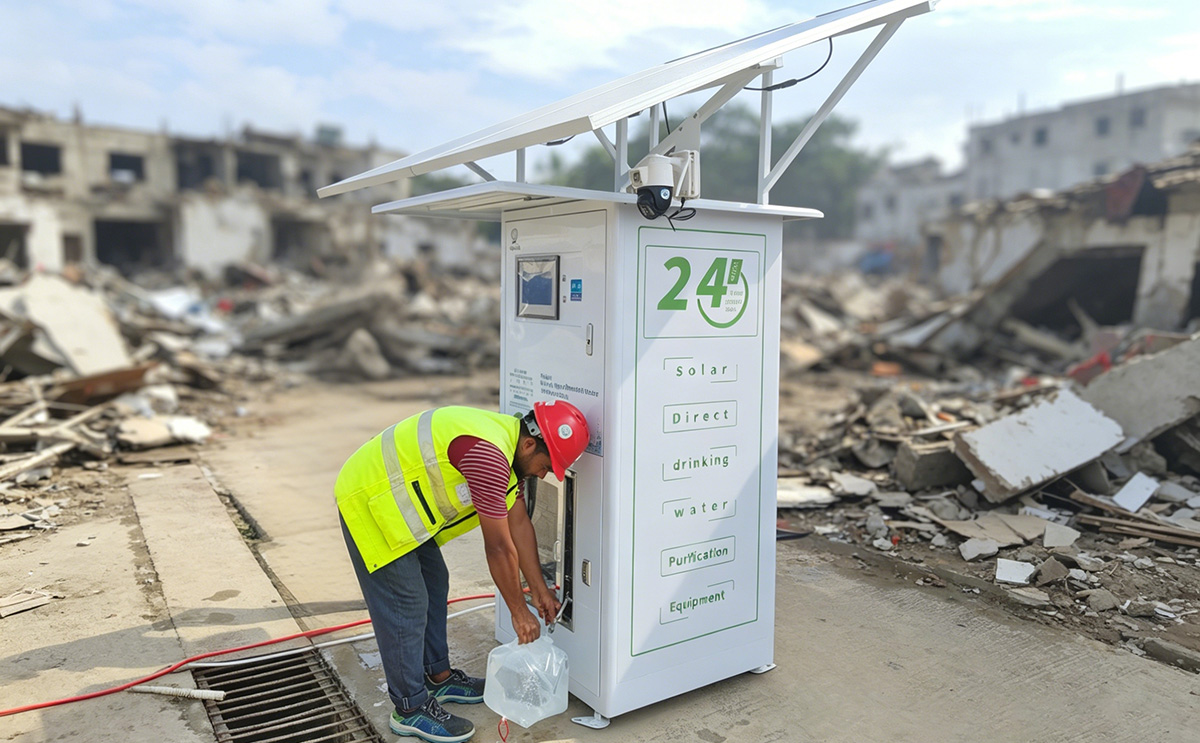
For industrial and humanitarian stakeholders — including NGOs, military field operations, and disaster-response agencies — modular solar RO units represent a critical-infrastructure asset. The ability to rapidly deploy a self-powered water purification plant to flood zones, conflict-affected areas, or remote construction camps, and begin producing 250–5,000 liters of drinking water per hour without local grid support, has made solar RO an essential part of emergency preparedness planning at national and international levels.
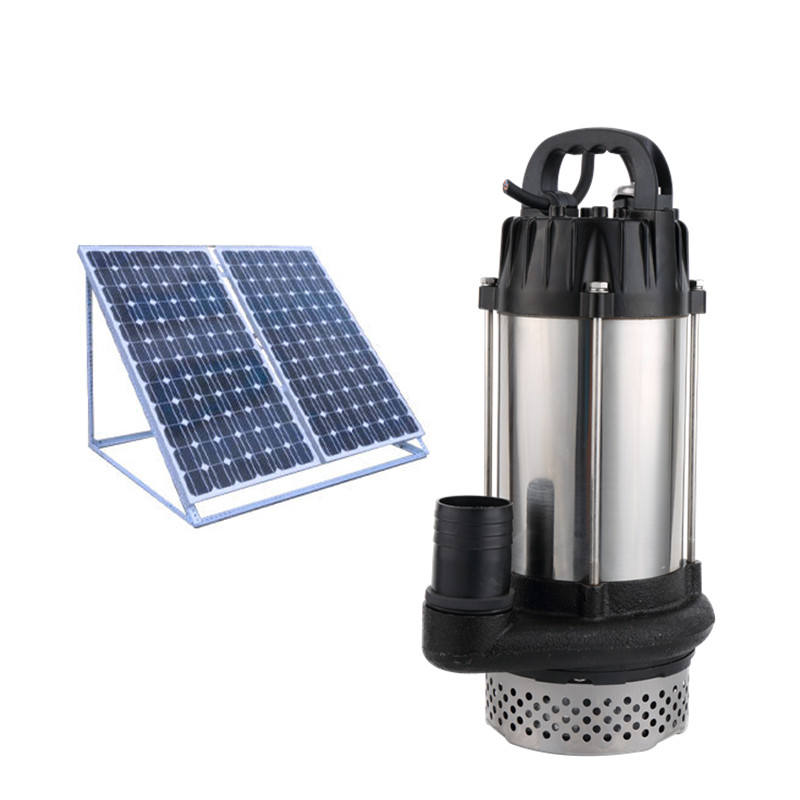
Advanced thin-film composite (TFC) membrane technology and micro-high-pressure pump engineering have reduced the weight and footprint of functional camping RO units by over 60% in five years. Next-generation units target sub-5 kg form factors capable of 50–100 L/hour output.
Real-time TDS (Total Dissolved Solids) monitoring, filter-life alerts, and remote diagnostics via Bluetooth or satellite IoT modules are becoming standard on premium camping RO systems, enabling predictive maintenance and quality assurance even in the most remote deployments.
Integrating lithium-iron-phosphate (LFP) battery storage with solar panels enables 24/7 water production regardless of cloud cover or night operation — a critical capability for camping sites and emergency deployments that require uninterrupted output.
Building-block system architectures allow a single core RO unit to be expanded from household-scale (50 L/hr) to community-scale (10,000+ L/hr) by adding membrane modules and solar panels — without replacing the core infrastructure, drastically reducing lifecycle cost.
Pressure exchanger-based energy recovery now reduces the power consumption of RO camping systems by 30–50%, extending the operational window on a given solar panel array and reducing battery bank requirements significantly.
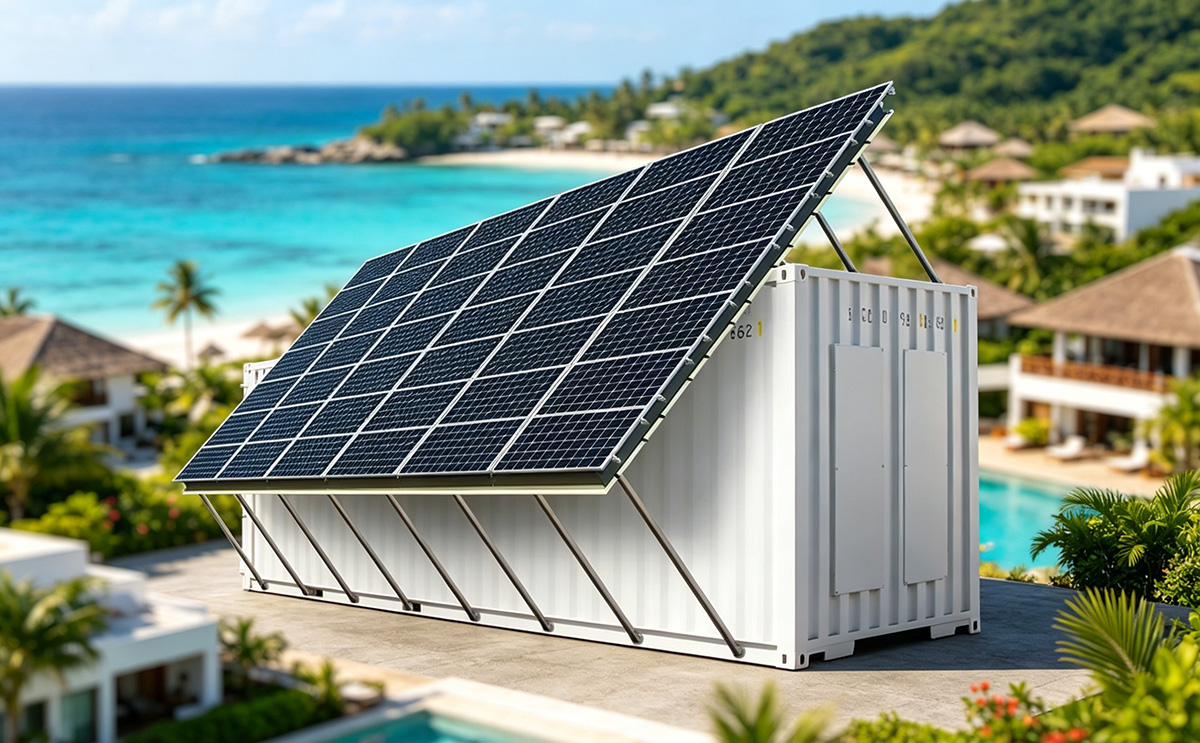
Coastal adventurers and island-based eco-resorts increasingly rely on compact seawater RO systems with solar power, eliminating the need for costly water delivery by boat and opening previously uninhabitable coastal sites for sustainable tourism development.
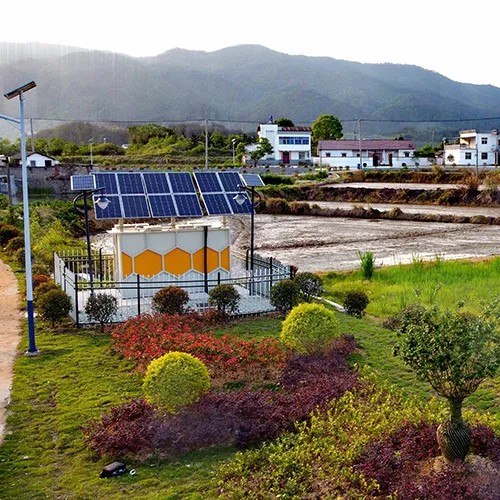
From weekend glamping to multi-month expeditions — where solar RO delivers unmatched value.
Vehicle-mounted compact RO units (12V/24V DC compatible) allow overland teams crossing arid regions, river basins, or coastal routes to draw from any available water source — eliminating the weight and logistical burden of carrying multi-day water supplies for 4–10 person teams.
High-altitude base camps face unique water quality challenges: glacial meltwater carries fine particulate and heavy metal runoff; solar RO systems operating on thin-air solar irradiance (often higher at altitude) produce reliably safe drinking water while minimizing portering load.
Solar seawater RO plants transform brackish or saline coastal water into premium drinking water for boutique island resorts and floating glamping operations — supporting guest water needs, laundry, and irrigation with a fully zero-carbon footprint and no chemical consumables.
Rapid-deploy solar RO units that can be airlifted or trucked into flood-affected communities and operational within 30 minutes, producing 250–1,000 L/hour of WHO-standard drinking water independently of damaged infrastructure — a life-critical capability for humanitarian operations.
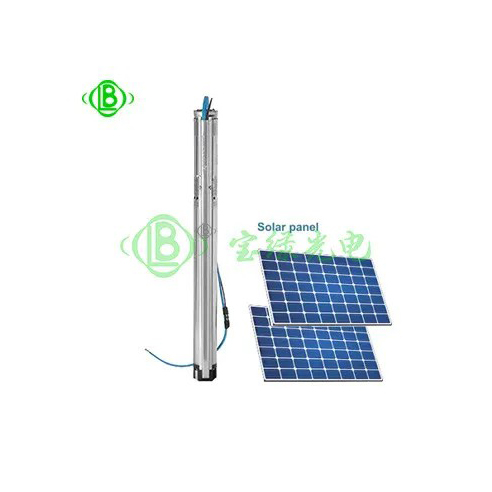
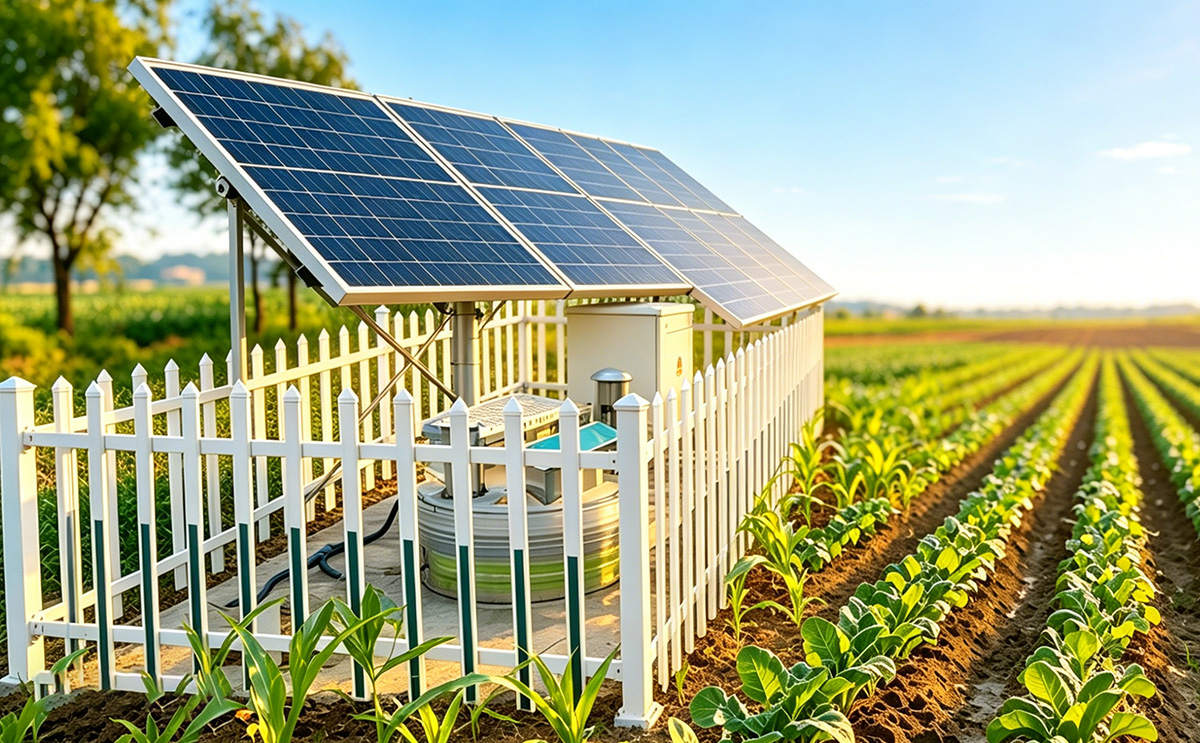
Farm stays and agri-tourism operators in water-stressed regions use solar RO systems to simultaneously supply safe drinking water for guests and process water for food preparation — while solar submersible pumps handle irrigation from the same renewable energy source.
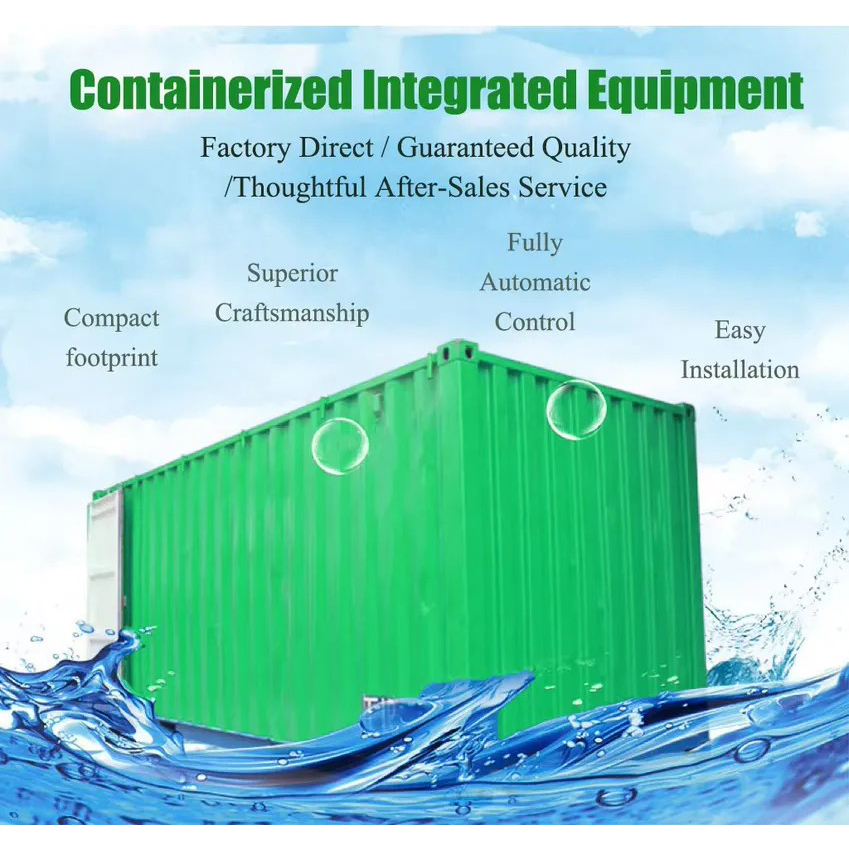
Construction and resource-extraction camps in remote or frontier regions deploy containerized solar RO plants to supply safe drinking and process water for crews of 50–500, eliminating the cost, carbon footprint, and supply-chain risk of trucked-in bottled water.
While UV sterilizers and ceramic filters address biological contamination, only reverse osmosis removes the full spectrum of threats encountered in outdoor water sources: dissolved heavy metals (arsenic, lead, cadmium), agricultural runoff (nitrates, pesticides), desalination (salt, brackish water), microplastics, pharmaceutical residues, and fluoride. For global expedition and emergency applications where water source chemistry is unknown and variable, RO is the only technology that reliably ensures compliance with WHO Drinking Water Quality Guidelines across all contaminant categories.
Selecting a solar RO camping water filter requires matching five key parameters to your specific application: daily water demand (volume per person × group size), available solar irradiance at your destination, feed water quality (TDS level, salinity, turbidity), portability requirements (pack weight, transport mode), and durability needs (operating temperature range, ingress protection rating).
For individual or small-group camping (2–6 people), compact units producing 50–150 L/day powered by a single 100W fold-flat solar panel represent the optimal balance of performance and portability. For base camps, eco-resort operations, or emergency response units serving 20–200 people, modular skid-mounted or containerized solar RO systems in the 500–5,000 L/day range — equipped with MPPT charge controllers, battery storage, and remote monitoring — provide industrial-grade reliability with minimal operator intervention.
🔬 Technical note: Premium solar RO camping systems incorporate multi-stage pre-filtration (sediment → activated carbon → antiscalant dosing) upstream of the RO membrane, extending membrane service life to 2–5 years even in high-TDS or high-turbidity source water — a critical factor for the total cost of ownership in remote deployments.
The environmental arithmetic of solar RO versus bottled water in outdoor settings is compelling. A camping group of 10 people consuming 3 liters per person per day over a 10-day expedition would require 300 liters — approximately 600 single-use 500ml plastic bottles. A compact solar RO unit replaces all of these with essentially zero ongoing material waste and near-zero operational cost (sunlight is free). Over the lifetime of a quality solar RO unit (10–15 years), the avoided plastic waste runs into the tens of thousands of bottles per unit, and the economic saving over purchased water or water logistics is typically 70–90%.
For commercial operators — eco-resorts, glamping parks, expedition companies — this economic equation translates into a typical return on investment period of 18–36 months, after which the system operates at near-zero variable cost while continuously delivering a marketable sustainability credential that increasingly influences booking decisions for premium outdoor hospitality consumers.
We are committed to providing customers with efficient, environmentally friendly and sustainable solutions.
Anhui Baolv(ABG) Photoelectric Environmental Protection Equipment Co., Ltd. is a high-tech enterprise wholly owned by Anhui Baolv Photoelectric Engineering Co., Ltd., focusing on R&D and manufacturing of software and hardware for pure solar-powered water environmental protection equipment. We are committed to providing customers with efficient, environmentally friendly and sustainable solutions.
LEARN MORE
Baode's one-stop energy-saving solutions cut costs, boost efficiency and turn energy-intensive enterprises into energy-saving benchmarks, winning wide acclaim.


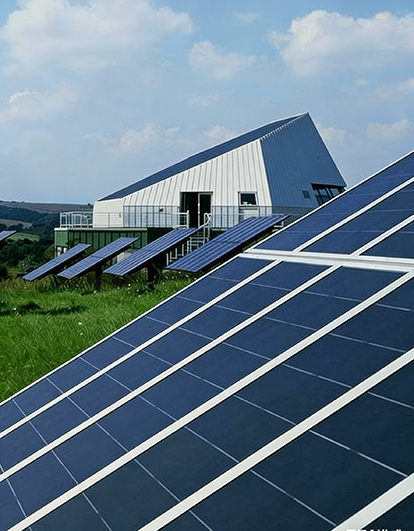
Fully solar-powered for complete, off-grid energy independence.


Flexible, building-block design adapts to diverse application scenarios.


Built for harsh, unmanned areas with minimal maintenance required.


One-time investment enables long-term, zero-carbon and zero-cost operation.
Application


Our customers are spread all over the world, and now our products have been sold to over 80 countries worldwide. We are also committed to providing high-quality packaging for the world's top companies.
Browse our full lineup of solar-powered RO filtration, water purification, and pumping systems for outdoor camping and off-grid applications.