
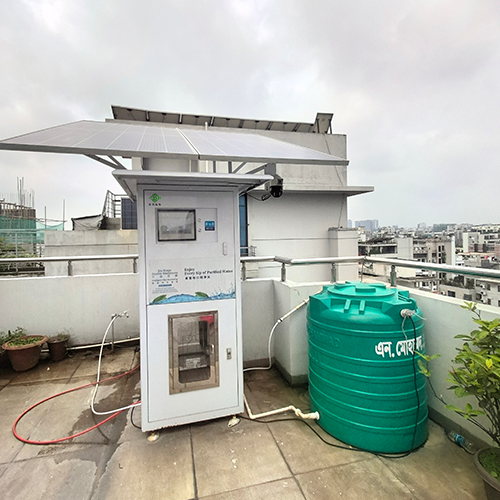
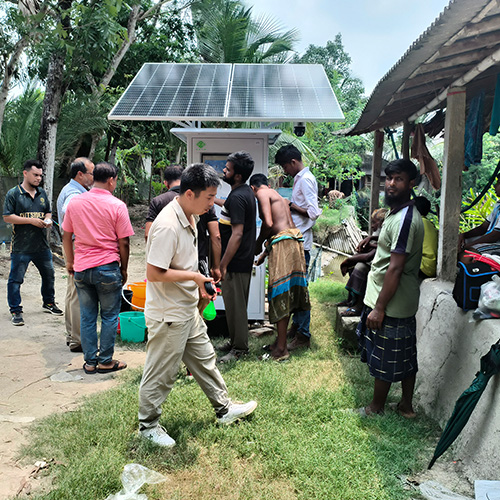
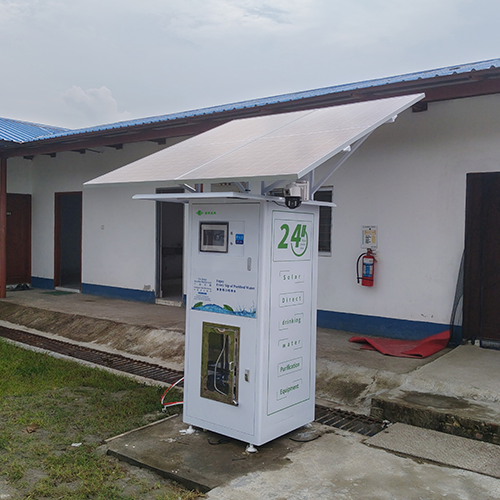
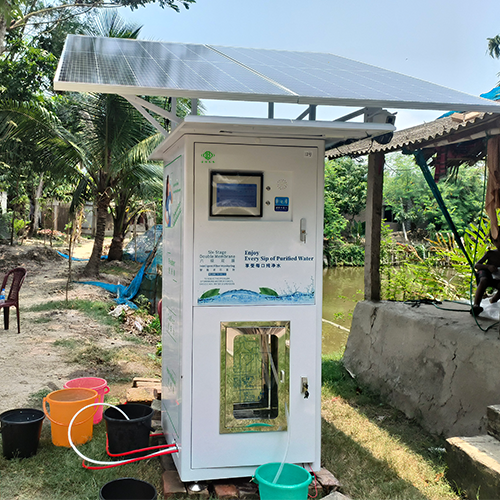
- Solar Powered Drinking Water System
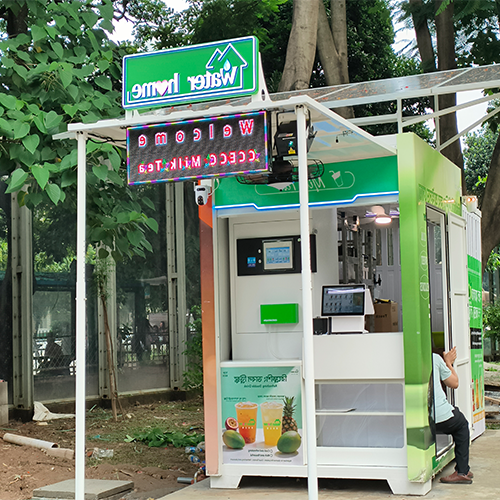
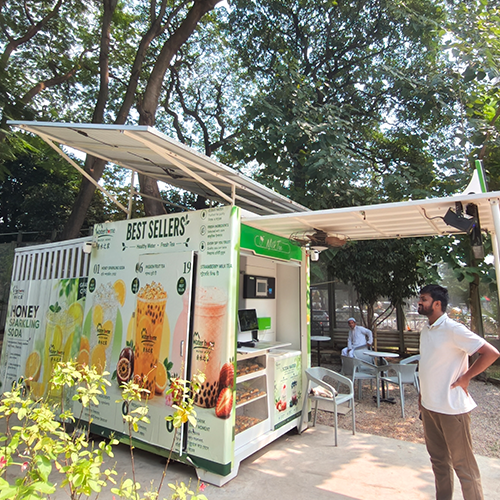
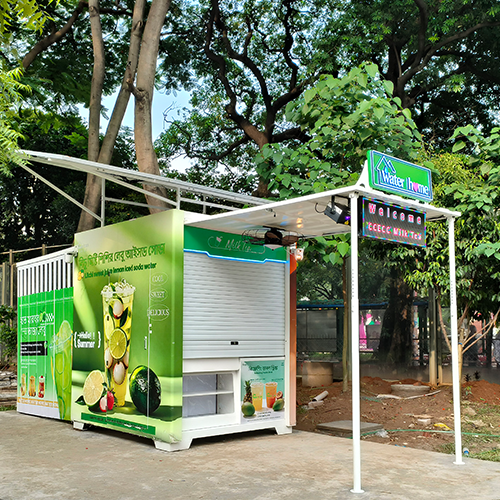
- WaterHome — Solar-Powered Mobile Beverage Station
- Solar Powered Sewage Treatment Plant
- Solar Powered Pond Aerator
- Solar Powered Water Pump
- Fiberglass Lift Station
- Solar Powered Fish Aerator
- Submersible Jet Aerator
- Solar Powered Irrigation System
- Solar Microgrid System
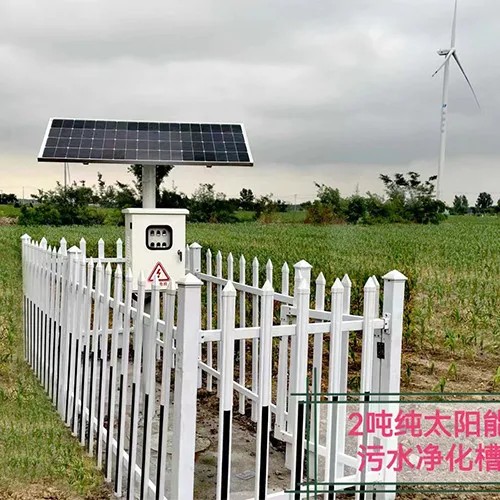
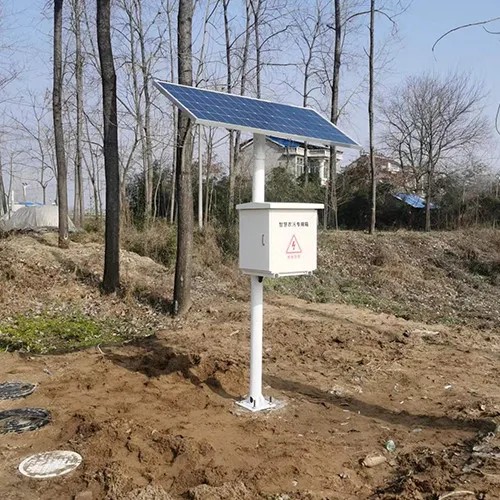
Solar Powered Decentralized Wastewater Treatment Systems from China Suppliers and Factory - ABG Model BL-L2T05
Power
1kW / Installed: 2.1 KW
Voltage
Solar Energy (220V Main Power Supplement)
Weight
80 kg / 4800 Kg (Net Weight: 8.8 T)
Core Components
Pump, PLC, Regulating Cell, Photovoltaic Panel, Battery
Processing Capacity
10-100 M3/d
Technology & Standard
AAO / Level A Standard
Highlights
Payment & Shipping Terms
Minimum Order Quantity
1 Set
Price
USD 2,000 - 4,000
Packaging Details
Wooden Box
Delivery Time
7 - 15 Days
Payment Terms
L/C, T/T, Western Union
Supply Ability
100 Sets / Month
Technical Principle
Energy Supply
Solar energy is converted into electricity through photovoltaic panels and stored in batteries to provide power for the sewage treatment process (such as pumps, aeration devices, and control systems), achieving "zero external grid connection" operation.
Intelligent Control
Integrated with a PLC control system, it automatically adjusts the operation mode based on water quality and quantity, and supports remote monitoring (such as checking the equipment status via a mobile phone APP).
Treatment Process
Usually, a combined process of "pretreatment + biological treatment + advanced treatment" is adopted, for example:
Pretreatment: Grid filtration and grit chamber to remove large particle impurities.
Biological treatment: Degrading organic matter through anaerobic/aerobic microorganisms (such as cooking oil and detergents in hotel wastewater, and domestic pollutants in retail wastewater).
Advanced treatment: Membrane filtration, ultraviolet disinfection, etc., to make the water quality meet the discharge standards or reuse requirements.
Environmental Protection & Energy Conservation
1. Zero Carbon Emissions & Water Recycling
Zero carbon emissions: Relying on solar power supply, it can reduce carbon emissions by tens of tons annually compared to traditional electric equipment, which is in line with the hotel's "carbon neutrality" promotion selling point (such as the ESG report requirements of international brands).
Water resource recycling: The treated water quality can meet the "Urban Sewage Reuse" standard and be reused for hotel toilet flushing, landscape water replenishment, or irrigation of shopping mall greenery, saving more than 30% of water consumption.
Case Study:
After a resort hotel in a certain scenic area adopted solar-powered sewage treatment equipment, the daily reuse of reclaimed water reached 200 tons, saving approximately 150,000 yuan in water fees annually. At the same time, it was awarded the "Green Tourism Hotel" certification.
2. Flexible Adaptation to Site & Requirements
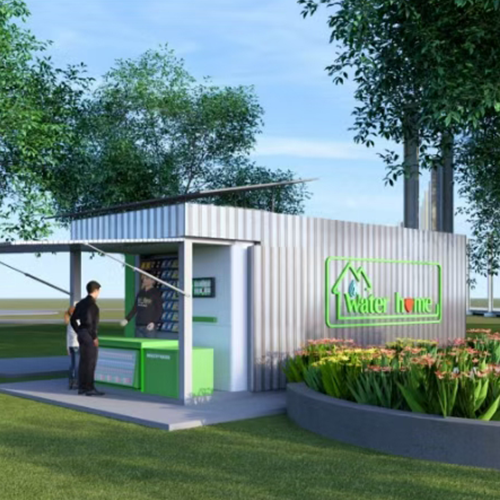
Small footprint and easy installation: The equipment mostly adopts modular design (such as container type), occupying an area of only 10-50 square meters (equivalent to the area of 1-2 hotel rooms), and can be installed underground or outdoors without affecting the ground planning of the shopping mall.
Resistance to load fluctuations: In response to the sudden increase in water volume during peak seasons in hotels (such as a doubling of sewage discharge during holidays), the equipment can intelligently adjust aeration time and sludge return ratio to ensure stable treatment efficiency.
Suitable for areas without pipeline networks: Such as suburban shopping centers and highway service areas. There is no need to wait for the municipal pipeline network to be laid. It can be directly "installed and used immediately", shortening the construction period by more than 50%.
3. Low Operating Costs & Economic Benefits
Zero electricity bill expenditure: Solar power supply covers over 90% of the energy consumption of equipment (such as aeration fans and water pumps), and only a small amount of battery reserve power is used on cloudy days, reducing the annual electricity cost by 90%.
Simple maintenance: High degree of automation, no need for dedicated personnel to stand by (only one inspection per month is required), reducing labor costs by 50% compared to traditional sewage treatment stations. The core components such as membrane modules have a lifespan of 5 to 8 years, and the replacement cost is low.
Quick return on investment: Taking a hotel that processes 100 tons of sewage per day as an example, the equipment investment is approximately 150,000 to 200,000 yuan. Through water conservation, electricity saving and government environmental protection subsidies (with special support in some areas), the cost can be recovered within 3 to 5 years.
4. Compliance and Brand Value Enhancement
Standard discharge: The COD (Chemical Oxygen Demand) of the treated water quality is ≤50mg/L, and the ammonia nitrogen is ≤5mg/L, meeting the first-level A standard of the "Pollutant Discharge Standard for Municipal Wastewater Treatment Plants", avoiding the risk of environmental protection penalties.
Marketing highlights: The retail industry can use the equipment as a promotional point for "green shopping malls" (such as displaying the processing procedures and water quality data on the notice board) to attract environmentally conscious consumers. Hotels can include it in the room manual to enhance guests' favorable experience.
5. Disaster Resistance & Continuous Operation
Independent power supply advantage: When natural disasters such as typhoons and heavy rain cause power grid failures, solar equipment can still rely on batteries to maintain operation for 3 to 5 days, avoiding sewage overflow pollution (traditional equipment stops running when power is cut off).
Low-temperature adaptability: Some equipment is equipped with a solar heating system, which can still ensure the activity of microorganisms in an environment of -10 ℃, making it suitable for use in hotels in northern regions during winter.
Technical Parameters
| Model No. | Treatment Object | Effluent Standard | Treatment Capacity (m³/d) | Dimension |
|---|---|---|---|---|
| BL-L2T05 | Domestic Sewage | National Standard Level A, Local Standards Level 1, 2, 3 (customized) | 0.5 | Customized |
| BL-L2T010 | 1 | Customized | ||
| BL-L2T030 | 2 | Customized | ||
| BL-L2T030 | 3 | Customized | ||
| BL-L2T040 | 4 | Customized | ||
| BL-L2T050 | 5 | Customized | ||
| Special Size | Customized | |||
System Diagram

Frequently Asked Questions (FAQ)
How does the solar power system operate during consecutive cloudy or rainy days?
The system features a battery storage setup and is designed with a 220V main power supplement. If solar storage runs low due to prolonged cloudy weather, the system automatically switches to the main power grid to ensure uninterrupted operation.
What is the footprint size required for installing this wastewater treatment system?
Due to its modular design (such as container-type units), the equipment occupies a very small area of only 10 to 50 square meters. It can be installed underground or outdoors, saving valuable space for hotels and commercial properties.
Can the treated water be safely reused for other purposes?
Yes. The system processes wastewater to meet the first-level A standard of the "Pollutant Discharge Standard for Municipal Wastewater Treatment Plants" (COD ≤50mg/L, ammonia nitrogen ≤5mg/L). The water is clean enough to be reused for toilet flushing, landscaping, and irrigation.
How does the system handle sudden spikes in wastewater volume during peak seasons?
Equipped with an intelligent PLC control system, the equipment automatically detects load changes and adjusts the aeration time and sludge return ratio to maintain stable treatment efficiency even when sewage discharge doubles during holidays.
What are the long-term maintenance and operating costs?
Operating costs are extremely low because solar power covers over 90% of electricity needs. The system is highly automated and requires only one routine inspection per month. The core membrane modules have a long service life of 5 to 8 years, resulting in minimal replacement costs.
Is this system suitable for cold northern regions during winter?
Yes, specific models can be equipped with a solar heating system that maintains microbial activity even in low-temperature environments down to -10 ℃, ensuring stable treatment performance year-round.